
Read the articles
select the relevant category
Aligning English and Italian Literacy: The Story Behind a Pilot Project
An English-Italian Cross-Linguistic Framework Every educational project begins with a question. Mine began in bilingual classrooms, where I often found myself observing children move naturally between English and Italian, making connections that were rarely…

Why Every IB® Continuum School Needs a Whole School Scope & Sequence
Building Coherence Across the PYP, MYP, and DP In a truly connected IB® World School, learning should never feel or look fragmented. Students should not experience the Primary Years Programme, Middle Years Programme, and Diploma Programme as separate educational…

IB® Approaches to Learning (ATL): a Whole-School Strategic Framework
The quality of learning is determined not only by what is taught, but by how deliberately skills are developed. In the IB® framework, Approaches to Learning are not an add-on to the curriculum; they are the connective tissue that runs through the entire IB® Continuum,…
IB® Learning Journey: excellence through a coherent continuum
The IB® learning journey is not a series of isolated academic stages; it is a deliberate and cohesive International Baccalaureate programme designed to evolve with the learner. To truly unlock the potential of the IB® education system, schools must move beyond seeing…
What Winnie the Pooh Can Teach Us About Belonging, Systemic Pedagogy, and the School Environment
There are quotes that stay with us for years, quietly accompanying our inner life until one day they reveal a deeper meaning. One of them, for me, comes from the world of Winnie-the-Pooh: “No one is left behind.” I first encountered this sentence when my daughter was…

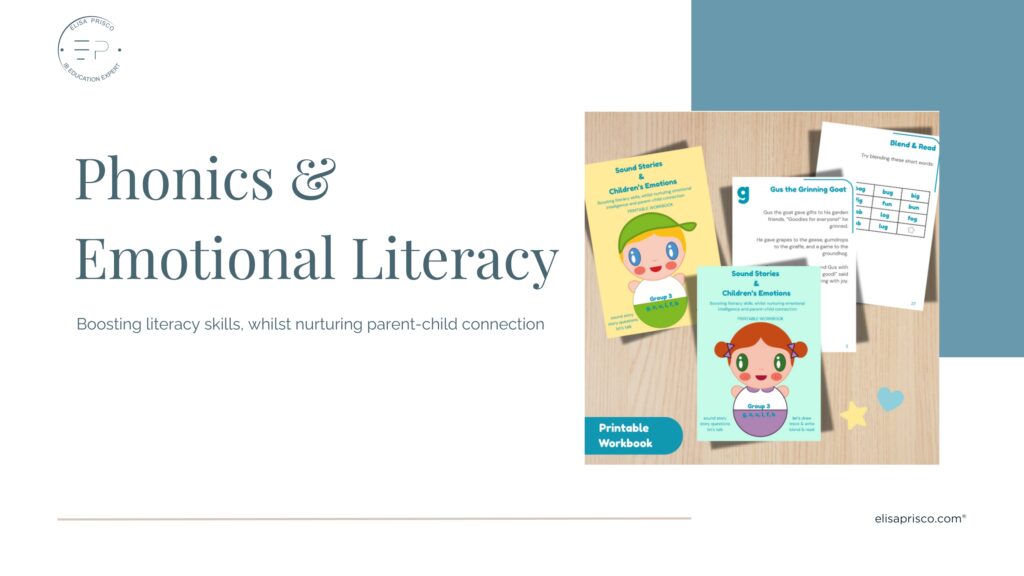
Phonics & Emotional Literacy: Sound Stories to Read, Talk and Grow Together
Learning to read is one of the most significant milestones in a child’s early years. But literacy development is never just a cognitive process; it is also an emotional one. The confidence to attempt an unfamiliar word, the willingness to try again after a…
Understanding Language Acquisition vs. Language Learning in International Schools
Throughout my experience in bilingual and international education, one question has continually shaped my professional reflection: beyond the many theories that explain language development, how do children really learn a new language? Working in international schools…

What happens if Leadership is not culturally and contextually aligned
Introduction Suppose all the principles and theories that identify the cultural & context alignment as essential to successful leadership are true. In that case, it is corollary that its lack contributes to leadership failure. The side effects deriving from…

How Effective IB® Leadership can be verified
Introduction According to the Global Leadership and Organizational Behavior Effectiveness (GLOBE) investigations into leadership effectiveness, “leaders who behave according to expectations are most effective” (Dorfman et al., 2021). Transferring this principle into…

Brain Development, Literacy Acquisition, and Educational Implications
Understanding Brain Differences in Literacy Development Recent advances in neuroscience have encouraged educators to examine how brain development may influence literacy acquisition, emotional regulation, attention, and learning behaviours in the classroom. While…

How Culture & Context are related to IB® Leadership
Introduction Universally, the literature consistently states that culture & context are inextricably linked to leadership (Groysberg et al., 2018). However, when referring to the IB® world, these two elements play an even more pivotal role as core…

IB® Core Elements: Learner Profile, ATL Skills and the Architecture of IB® Learning
The IB® Learner Profile and Approaches to Learning (ATL) are among the most visible and enduring expressions of IB® philosophy and programme implementation. They are not supplementary features; they are the philosophical and pedagogical architecture upon which the…
Teaching Tricky Words in Phonics: Strategies for Early Learners
In English, most words can be decoded by blending individual letter sounds together. Tricky words are the exception, though: they contain irregular spellings that cannot be reliably blended or segmented, and must therefore be learned through different, targeted…

IB® Programme Evaluation: a strategic guide for school leaders and teachers
IB® World Schools periodically face the same challenge: demonstrating that their practice genuinely reflects the standards they committed to at authorisation. The IB® Programme Evaluation is not a bureaucratic hurdle; rather, it is the moment where strategy,…
IB® Standards and Practices: the foundations of programme compliance and school effectiveness
The IB® Standards and Practices represent the foundational framework of the IB® system. Whether your school is in the application phase or preparing for Programme Evaluation, these standards provide an essential roadmap for strategic planning and sustainable school…
IB® Leaders Requested Characteristics
Introduction The IB® framework is outlined by rigorous and distinct standards and practices (International Baccalaureate Organization, 2020) which also include leaders’ professional and personal requirements. Specifically, within the IB® guidelines, there are…

Depersonalised Leadership as Key to Successful Organisations
Synopsis Static leadership is risky. It jeopardizes the organization’s success while intimidating the staff’s creativity, work culture, and sense of belonging. Instead, the wise application of the depersonalized leadership approach is the key to preventing failure and…

Educational Management and Leadership Concepts: Upsides and Downsides
Framing the meaning of management and leadership Too often, the concepts of leader and manager are used to make uninformed and unfair comparisons that inevitably result in assigning lower value to those involved in management as if they are equipped with an inferior…

What I specialize in

IB EDUCATION

SYSTEMIC PEDAGOGY

STRATEGIC DEVELOPMENT PLANS

EDUCATIONAL LEADERSHIP
